Designing for Dignity:
How Thoughtful Emergency Department Spaces Improve Patient Outcomes
Patients arriving at an emergency center often experience the same mix of emotions: pain, fear, and a distinct loss of control. Vulnerable moments like these send powerful messages: Either they’re safe and cared for, or they’re just another case to process.
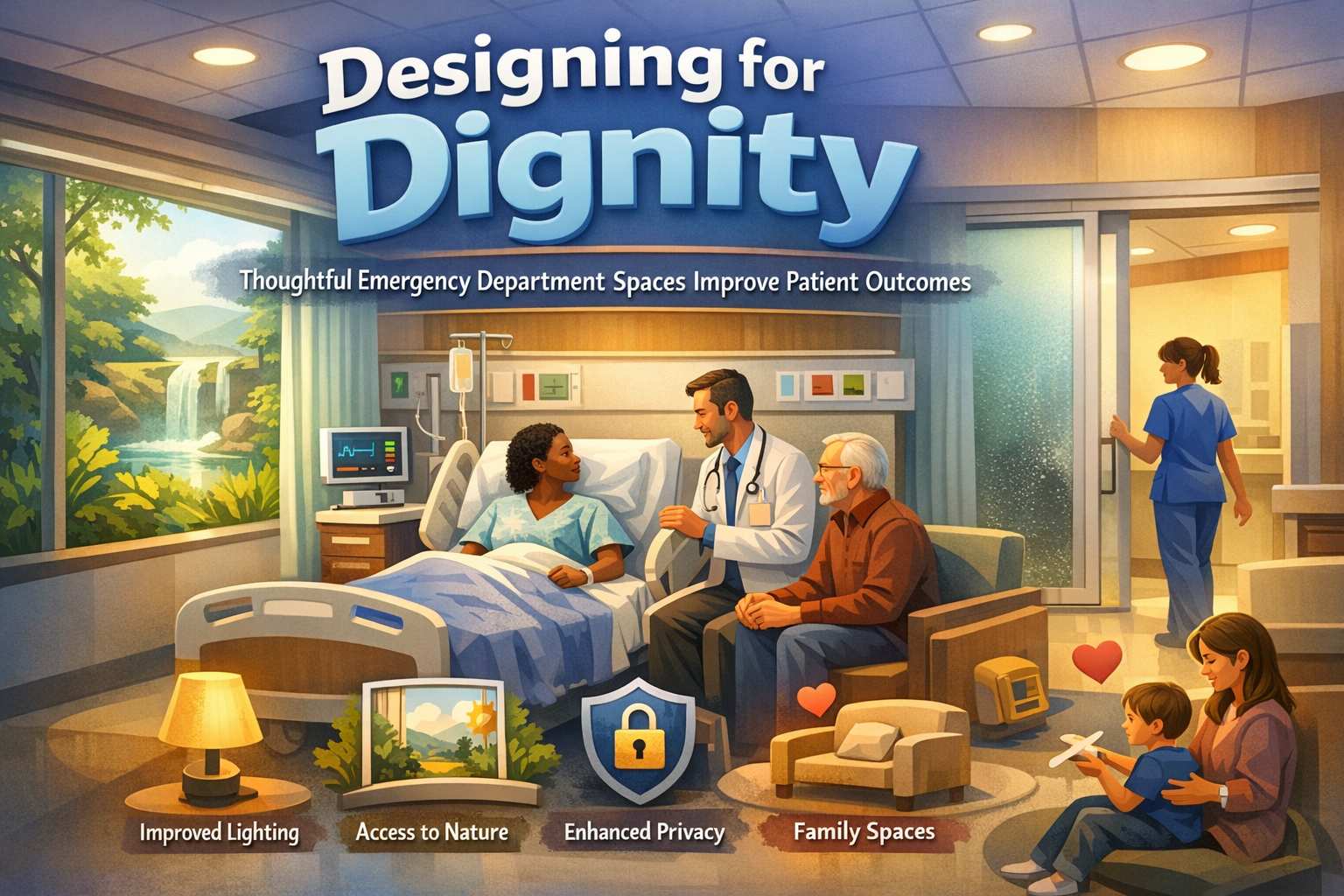
Emergency department design fundamentally focuses on providing emergency care that shapes patients’ experience, influences clinician trust, and measurably impacts clinical outcomes. But there are so many emergency departments today that operate on outdated principles and within outdated spaces. Small changes—such as lighting, privacy, views to nature, and family accommodation—can make all the difference.
The Patient Experience in Emergency Departments
Emergency departments have their own unique challenges, often resulting from patients spending critical hours in unfamiliar environments during extremely vulnerable moments. The stress is often physically manifested: cortisol elevates, blood pressure rises, and anxiety deepens pain perception. The psychological stress complicates recovery and influences clinical outcomes, including pain management effectiveness and medication compliance.
For the family members who wait outside, they are often met with uncomfortable waiting spaces. Ultimately, these experiences affect family satisfaction, patient recovery, and perceptions of the entire hospital.
How Design Elements Impact Patient Outcomes
Environmental designs impact patients by either triggering uncomfortable emotions or relieving stress. Natural light and visual connection to the outside world reduce anxiety and support healthy circadian rhythms. Privacy vastly improves patient dignity, and maintaining visual and acoustic privacy during vulnerable procedures can significantly increase satisfaction.
The way a hospital flows also reduces disorientation for patients and families. Clear signage, logical layout, and visible information stations reduce overall stress. Even comfort from adequate seating, accessible water, temperature control, and functional restrooms influences treatment adherence and satisfaction. Patients who feel like their basic needs are met are also more likely to trust the clinicians and follow medical recommendations.
Creating Comfort Through Design
Dignity in healthcare means respecting autonomy, maintaining privacy, reducing helplessness, and honoring humanity, even in a crisis. Hospital design either supports or undermines those principles.
Lighting is one of the most influential design elements within a hospital. Harsh fluorescent lighting creates clinical coldness. Layered lighting with warmer tones creates a sense of comfort. Color selection in the form of warm neutrals and accent colors creates intentional institutional environments. Temperature, air quality, and storage organization that keeps supplies accessible also demonstrate care and improve patient confidence.
Well-designed spaces with logically organized equipment also enable clinicians to work more efficiently, something all patients recognize. When clinicians are purposeful rather than disorganized, patients feel safer.
Designing Spaces That Respect Human Dignity
Emergency departments can implement specific, actionable design tactics to create spaces that improve both efficiency and comfort. Improvements can range from low-cost modifications to comprehensive redesigns. The results depend on staff and patient feedback.
Optimizing Waiting and Patient Flow
Audit patient and family awaiting areas. Emergency departments should have comfortable seating and clear signage in multiple languages. Providing real-time wait updates on digital displays can significantly reduce anxiety from uncertainty.
Streamline patient intake processes by designating dedicated staff or a registration area from clinical spaces. When patients are within the emergency department, provide intuitive signage that helps patients and families navigate without confusion.
Creating Designated Spaces for Multiple Functions
Implement “family presence zones” with bays and visible barriers that provide privacy without complete isolation. Sectioning off family-designated areas reduces disruption to clinical work. Also, consider designating at least one private consultation room with comfortable seating, tissues, water, and phone access for serious conversations.
Creating quiet spaces for patient rest and staff breaks, even small rooms with comfortable seating, soft lighting, and minimal stimulation, can significantly reduce stress. In working areas, design treatment spaces that provide flexibility, allowing rooms to be reconfigured quickly for different activity levels or patient volumes.
Reducing Noise and Environmental Stress
Acoustic improvements, like sound-absorbing ceiling tiles and wall panels, can reduce noise propagation from monitors, alarms, and conversations. Quieter emergency departments mean calmer patients.
An emergency department’s organization greatly impacts both patients and staff. Address temperature control, air quality, and inadequate lighting, all of which can significantly impact staff performance and comfort perception. Areas with poor environmental control increase disorientation and anxiety. Reduce visual clutter by organizing systems and supplies.
Optimizing Workflow and Equipment Organization
Frontline emergency department staff often have the best insights into current workflows and bottlenecks. Many of these inefficiencies come from poor space organization. Standardizing medical cart configurations makes it much easier for staff members to identify and locate critical items. Make sure all carts are clearly labeled and organized with necessary supplies kept within arm’s reach to reduce retrieval time during emergencies.
Design workstations so clinicians can document updates while maintaining visual contact with patients. Computers and emergency health record access should be at the bedside or in close proximity. Mobile technology can allow clinicians to bring information to patients rather than leaving them to access remote stations.
Integrating Technology Without Creating Barriers
All monitoring systems, communication devices, and electronic records should be positioned to improve clinician-patient interaction. Test new technology with frontline staff before implementation. Any technology that disrupts workflows should be eliminated.
Implement communication systems that don’t create acoustic stress. For example, loud alert volumes and notification systems that inform staff and can alarm patients. Using electronic signage systems can streamline communication about patient status, room availability, and wait times.
People Also Ask
Can emergency department design actually improve patient recovery rates?
Yes! Design elements, including privacy, natural light, reduced noise, and reduced anxiety, all support psychological healing. Patients in well-designed spaces often have lower pain levels, better sleep, and faster recovery.
What is the most cost-effective emergency department design improvement?
Lighting upgrades, acoustic improvements, and strategic furniture placement all significantly impact patient satisfaction with moderate investment.
Can privacy be maintained while keeping patients visible to staff?
Yes. Strategic use of glass partitions, curved walls, careful curtain placement, and room layout all make it possible for clinicians to maintain visual contact while providing patients with acoustic and visual privacy.
How does waiting room design affect patient anxiety?
Comfortable seating, natural light, clear communication about wait times, access to amenities, and visual connection to nature all reduce anxiety. Patients in well-designed waiting rooms have lower stress regardless of actual wait time.
Conclusion
The emergency department is one of healthcare’s most emotionally charged environments. The physical environment sends a clear message about the hospital’s investment in patient-centered design. When design and clinical efficiency work together, the emergency department becomes far more aligned.
As healthcare continues to evolve, the quality of the physical environment will increasingly distinguish hospitals that genuinely prioritize patient-centered care.
Waterloo Healthcare has spent over 50 years designing medical carts that support optimal clinical environments. Our customizable solutions integrate seamlessly into well-designed emergency departments to create a physical organization that supports both clinical efficiency and patient safety.