Best Practices for Clinicians: Effective Use of Code Carts
in Emergency Resuscitation
Strategies to reduce emergency response times and improve ACLS compliance, standardize cart configurations, and enhance patient outcomes during cardiac arrest and medical emergencies often come down to actionable best practices for code cart management. Most of the time, this includes maintenance checklists, training protocols, and quality improvement metrics to make systems significantly easier to maintain.
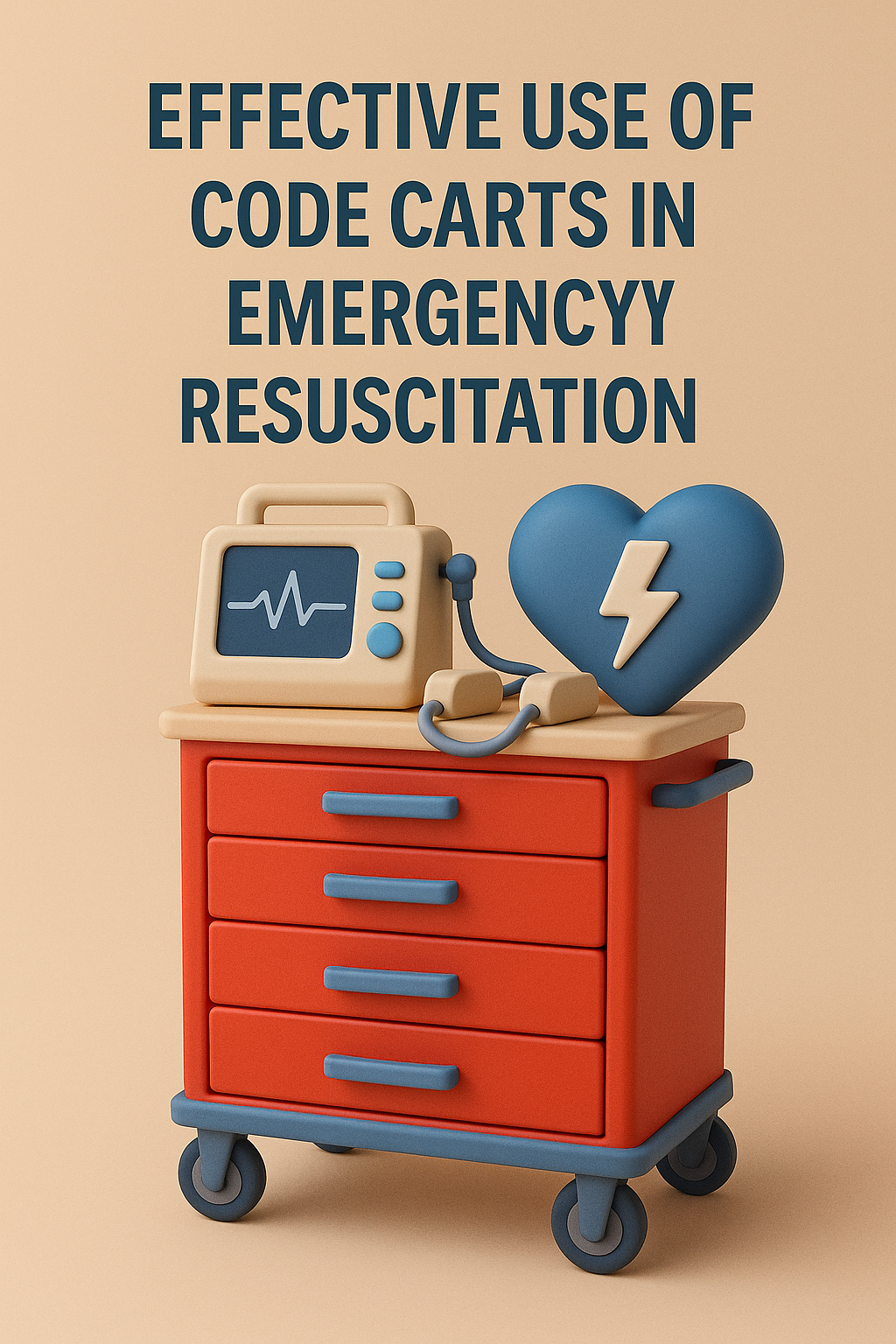
In hospital settings, a “code cart” (also known as a crash cart or emergency resuscitation cart) is an essential tool designed to provide immediate access to life-saving medications, equipment, and supplies during a medical emergency. The cart’s contents, organization, and readiness directly affect the speed and effectiveness of a resuscitation effort. To ensure optimal outcomes, clinicians must not only be familiar with the equipment but also follow best practices in preparation, maintenance, and team coordination.
Properly maintained code carts are critical for compliance and improved patient outcomes. Below, we’ll discuss common challenges, including cart standardization, equipment readiness, staff training protocols, and emergency response coordination.
1. Ensure Familiarity and Readiness
Every clinician responding to a code should be thoroughly familiar with the code cart’s layout and contents. Although general configurations are standardized across most facilities, drawer organization and labeling may vary slightly between departments.
Regular in-service training and mock code drills help staff build muscle memory, reducing hesitation and improving retrieval times during an emergency. Each clinician should know where to find critical items such as the defibrillator, airway supplies, epinephrine, and IV access kits without having to search or rely on others.
Regular hands-on simulation training with actual code cart equipment significantly reduces medication retrieval time. Creating visual chart maps, implementing unit-specific orientation for new staff, and establishing minimum response-time benchmarks are among the best practices during this training.
2. Conduct Routine Checks and Documentation
A code cart must be ready for use at all times. Hospitals should implement daily or shift-based visual checks and monthly comprehensive inspections to verify that all items are present, unexpired, and functional. Lock or tamper seals should be intact, oxygen tanks adequately filled, and defibrillator batteries charged. When a code cart is used, it should be restocked and resealed immediately after the event, with documentation confirming completion. Failure to maintain the cart’s readiness can delay care and jeopardize patient outcomes.
Monthly, audit the medication inventory and test all of the battery-operated equipment to ensure everything works properly. Consider adding automatic tracking to reduce human error and monitor expiration dates.
3. Maintain Standardization Across Units
Consistency is crucial for efficiency. When cart layouts differ significantly between departments, clinicians responding to cross-unit emergencies may waste valuable time searching for equipment. Hospitals are encouraged to standardize cart configurations, labeling, and color coding across units whenever possible. This not only improves familiarity but also streamlines restocking, auditing, and training processes.
Create facility-wide cart maps that can easily be displayed on each cart exterior, and establish centralized restocking procedures through pharmacy and materials management. The more standardized your system is, the faster response times become.
4. Optimize Team Roles and Communication
Effective resuscitation depends on clear communication and defined team roles. The “code leader” should direct all activity, while assigned clinicians manage tasks such as medication administration, airway management, documentation, and equipment retrieval. The person operating the code cart must anticipate needs, such as handing off supplies quickly and verifying orders aloud to prevent medication errors. Practicing these role assignments during mock codes ensures smoother coordination during real events.
Additional team roles could include compressors who perform high-quality chest compressions, a scribe documenting timing, interventions, medications, etc., and a family liaison.
5. Integrate Ongoing Education and Simulation
Regular simulation training enhances clinician competence and confidence. These sessions should incorporate not only Advanced Cardiac Life Support (ACLS) protocols but also hands-on use of the code cart. Periodic refresher courses, post-event debriefings, and equipment updates reinforce familiarity and promote a culture of continuous improvement.
Integrate code carts navigation exercises into ACLS skill stations during certification courses. Once you feel comfortable with the training, hold debriefing sessions to focus on improving efficiency, team dynamics, and communication patterns. Review your actions using video recording and open the floor for communication on improvements. Then, track your competency metrics and provide any additional training as needed.
6. Promote Safety and Infection Control
After each use, all reusable equipment must be cleaned and disinfected in accordance with infection-control policy. Disposable items should be replaced promptly. Carts should be positioned for easy access but secured to prevent unauthorized use or tampering. Regular inspection of wheels, brakes, and locks ensures that the cart remains mobile and reliable.
Consider storing personal protective equipment and keeping it easily accessible. Use barrier protection on reusable equipment, including defibrillator paddles and laryngoscope handles. Also, post emergency contact information for pharmacy and biomedical engineering on the cart’s exterior.
7. Quality Improvement and Review
Beyond routine maintenance, hospitals should incorporate the code cart into their quality-improvement process. Reviewing post-event documentation and team feedback can reveal opportunities to refine cart design, improve supply choices, or enhance training. Tracking restock frequency and expiration trends also helps purchasing teams optimize inventory levels and reduce waste.
Monitor your carts readiness compliance rate and establish a multidisciplinary code cart oversight committee, including representatives from every hospital section. Review your performance data regularly to implement actions that could improve based on deficiencies identified. Discuss root cause analysis for any cart-related delays or complications. Make it easy for frontline staff to provide feedback on issues or suggest improvements, and document all quality improvement initiatives to improve outcomes.
In summary, the code cart is the cornerstone of organized, efficient, and effective emergency response. By emphasizing familiarity, standardization, readiness, and teamwork, clinicians can ensure that every second counts when saving a patient’s life.
Frequently Asked Questions
Q: How often should code carts be inspected?
A: Conduct daily visual checks with documentation, plus comprehensively conduct monthly audits, including medication expiration verification and equipment testing.
Q: What medications are required for hospital code carts?
A: ACLS guidelines include epinephrine, amiodarone, atropine, sodium bicarbonate, calcium chloride, dextrose 50%, naloxone, and other emergency drugs based on institutional guidelines.
Q: Who is responsible for code cart maintenance?
A: Nursing staff usually perform daily checks while the pharmacy manages medication inventory and expiration monitoring. Biomedical engineers maintain defibrillators and other electronic equipment. All of this depends on role definitions.
Q: How can hospitals standardize code cards across different units?
A: Use identical drawer configurations, universal color coding, standardized equipment brands, facility-wide cart maps, and centralized restocking procedures.