Crash Cart, Code Cart, Emergency Cart: A Guide to the Terminology
When a medical emergency strikes, the life-saving equipment used in U.S. healthcare settings is almost always the same, but called different things. This can cause confusion and complications for clinicians, documentation teams, and procurement staff. The carts vary in terminology, referred to as crash carts, code carts, resuscitation carts, or emergency carts, depending on the facility. This guide walks through the different terminology used for these carts, why the terms vary, when they are interchangeable, and the history of the crash cart.
Crash Cart Terminology: Definitions and Usage by Setting
While the different terms can be used interchangeably in some cases, each has its own specific definitions and origin.
Crash Cart
The term “crash cart” refers to the cart used when a patient is experiencing rapidly deteriorating symptoms, or “crashing.” This term is one of the most widely recognized labels for these carts in the U.S. “Crash cart” is often used interchangeably with the term “code cart” across hospital settings and in emergency departments.
Code Cart
“Code cart” is a term directly tied to hospital emergency code systems, specifically Code Blue. In the 1960s and 1970s, U.S. hospitals developed color-coded emergency communication systems to expedite communication and to alert staff quickly and discreetly without alarming patients. Code Blue is the standardized alert used when a patient is experiencing respiratory or cardiac arrest, and the cart used during a code became known as the code cart. The term remains widely used in both documentation and clinical workflow language across inpatient settings.
Emergency Cart
“Emergency cart” is a broader and more function-based label, describing what the cart does rather than the actual event it responds to (unlike the terms “crash cart” and “code cart”). It’s frequently encountered in procurement, hospital administration, manufacturer product listings, and facility management.
Resuscitation Cart
The label “resuscitation cart” emphasizes the clinical purpose of the cart and generally has the same underlying equipment and function as the other cart terms on this list. The primary difference is that this term often appears in accreditation language, operating room settings, and formal clinical literature, rather than in administration or manufacturing settings.
Crisis Cart
“Crisis cart” was the original term used by Anita Dorr, one of the people credited with the invention of a crash cart in 1967. The term is rarely used in modern clinical settings but occasionally appears in older clinical literature and nursing history.
Regardless of what it is called, every term in this list describes the same equipment serving the same function: rapid access to life-saving tools when a patient’s condition deteriorates. The terminology a facility uses is largely shaped by department culture, staff training, and internal policy. Clinicians working across units or transitioning to a new facility will likely encounter more than one label over the course of their career. When documentation or accreditation language requires precision, defer to the term used in your facility’s official policy and apply it consistently.
Quick Reference Table
| Term | Common Meaning | Typical Use | Notes |
|---|---|---|---|
| Crash cart | Emergency response cart | U.S. healthcare settings broadly | Most widely recognized U.S. term |
| Code cart | Cart used during a code | Clinical units, ICUs | Tied to code response systems |
| Emergency cart | Emergency equipment cart | Clinical and non-clinical settings broadly | Broader, function-based label |
| Resuscitation cart | Life-saving response cart | Formal/policy language | Common in accreditation and clinical literature |
| Crisis cart | Original emergency cart name | Historical/older literature | Term coined by Anita Dorr, 1967 |
Why Crash Cart Terminology Varies
The variation in crash cart terminology stems from the different professional functions, documentation, and emergency code systems across the U.S. healthcare system.
Regional And Institutional Language
Individual hospitals, healthcare facilities, and departments use their own preferred terminology, shaped largely by internal policy and staff training. A nurse oriented in one facility may use “code cart” exclusively, while administrative staff from another facility may use “emergency cart” because that is the term embedded in their onboarding materials and standard operating procedures.
Clinical Versus Procurement Language
Bedside staff and purchasing teams frequently use different labels for the same piece of equipment. Clinicians use the term “code cart” during a resuscitation event because the term aligns with the emergency code workflow, while procurement and supply teams may call the same equipment an “emergency cart” in catalogs, purchase orders, and records.
The Influence Of Emergency Codes
Hospital-wide emergency code systems, especially Code Blue, directly shaped the clinical vocabulary of crash carts. The term “code cart” derives directly from the emergency codes that trigger their deployment, a designation that has since become embedded in clinical workflows, documentation, and verbal handoffs throughout inpatient care.
Those code systems and the carts themselves have a deeper history that traces back to two inventors working independently in the 1960s.
The Origin And History Of The Crash Cart
The crash cart emerged from the parallel work of two innovators in the mid-1960s, each responding to the same clinical scenario: when a patient experienced cardiac arrest, there was no standardized, mobile system for delivering emergency equipment to the bedside.
Dr. Joel J. Nobel and the Max Cart, 1965
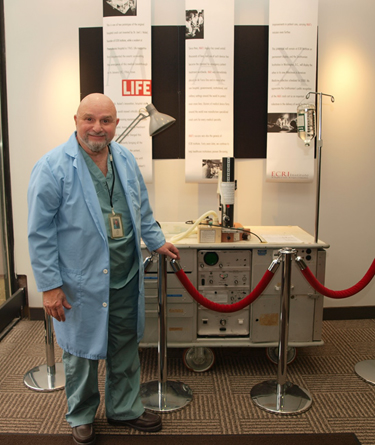
Dr. Joel J. Nobel designed and patented the Mobile Emergency Cart, known as “Max,” at a hospital in Philadelphia in 1965, according to the Smithsonian. Nobel created the cart to consolidate the scattered emergency tools clinicians needed during a resuscitation event and to reduce time spent gathering equipment from separate locations within a hospital unit. Around 600 carts were distributed to hospitals across the country following its introduction, including one used at the White House, and LIFE magazine featured the design in a 1966 article. The original prototype now resides in the permanent collection of the Smithsonian’s National Museum of American History.
Anita Dorr and the Crisis Cart, 1967
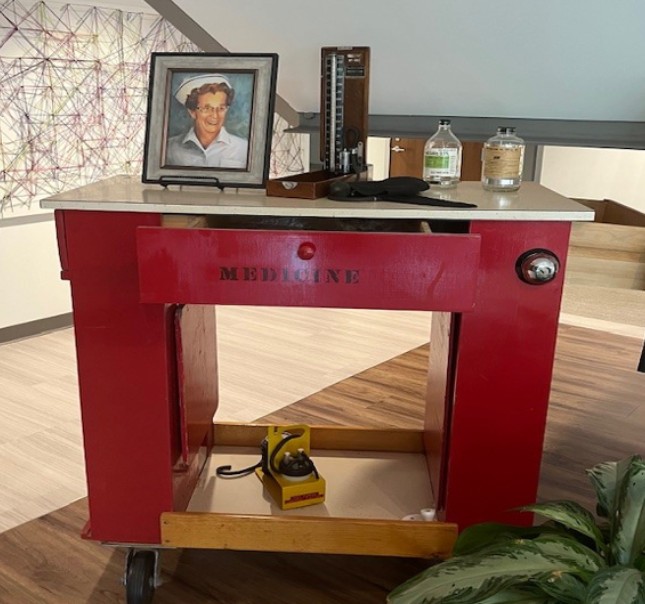
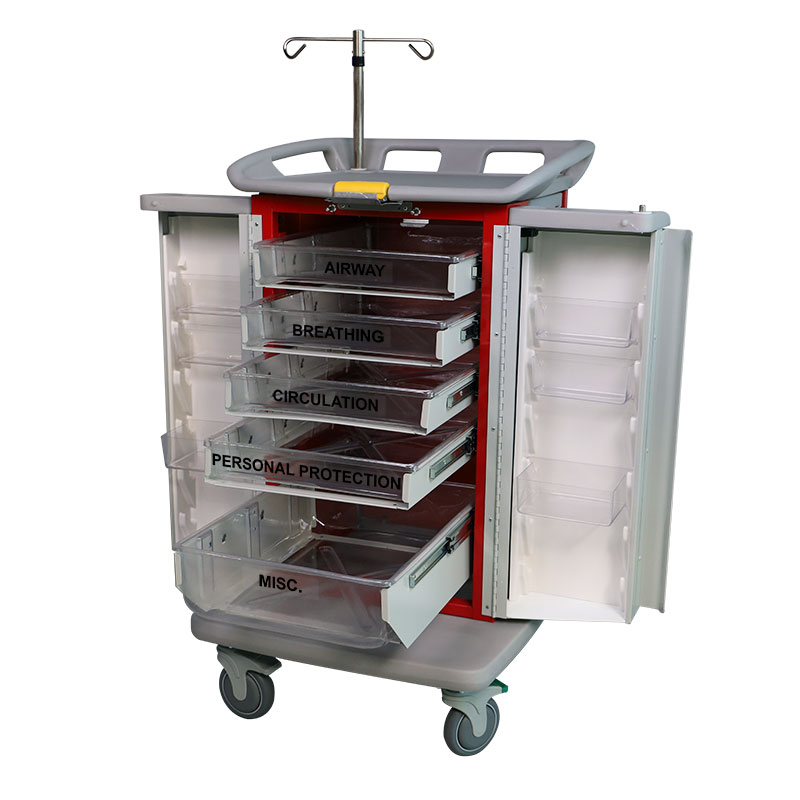
In 1967, emergency department nurse Anita Dorr developed the “Crisis Cart,” also known as the “Dorr Cart,” while serving as the emergency department supervisor at Edward J. Meyer Memorial Hospital in Buffalo, New York. Working alongside her husband in the basement of their home, Dorr created the first red wooden prototype. This first model was organized anatomically, with supplies grouped according to the region of the body they served. The design more closely resembled the crash carts in clinical use today than Nobel’s earlier Max Cart did. Although Dorr did not pursue a patent for her cart design, she went on to co-found the Emergency Department Nurses Association, now the Emergency Nurses Association. She served as the association’s first executive director and helped shape the profession’s role in emergency response.
Conclusion
Crash cart terminology reflects the layered history of emergency medicine in the United States, shaped by the clinicians, institutions, and standards that have evolved over more than half a century. Whether a facility calls it a crash cart, code cart, emergency cart, or resuscitation cart, the function remains constant: placing the right tools in the right hands at the right moment.
For over 50 years, Waterloo Healthcare has designed medical carts that support that function across hospitals, long-term care centers, ambulatory surgery centers, and rehabilitation facilities. Our customizable solutions are built to withstand the demands of emergency response while supporting the workflow efficiency clinicians depend on in critical situations. Contact our team to learn how Waterloo Healthcare can support your facility’s emergency cart needs.
Frequently Asked Questions
Is the term crash cart used outside the U.S.?
No, the term ‘crash cart’ is largely specific to the United States. Outside of the U.S., “crash trolley” and “resus trolley” are the more common labels, particularly in the United Kingdom and Australia, where “trolley” is the standard term for a wheeled clinical cart. The underlying equipment and clinical function remain consistent across regions; only the regional terminology differs.
Who is responsible for maintaining a crash cart?
Crash cart maintenance is shared across three teams: nursing staff, pharmacy, and biomedical engineering, with specific duties defined by facility policy. Nursing staff typically handle daily and shift-based checks, including seal verification and visual inspection. Pharmacy manages medication inventory and expiration monitoring, while biomedical engineering is responsible for the calibration and servicing of electronic equipment such as defibrillators and cardiac monitors.
Which term for “crash cart” should appear in official documentation?
In official documentation, the appropriate term is whichever one appears in the facility’s official policy, accreditation documents, or department-specific protocols. Consistency within a given facility carries more weight than alignment with any single universal standard, and matching documentation language to policy language reduces ambiguity during audits and regulatory reviews.
Do all facilities in the U.S. use the same crash cart standard?
No, facilities in the U.S. do not operate under a single crash cart standard. The American Heart Association’s Advanced Cardiac Life Support guidelines inform cart contents broadly, but specific requirements vary by state, facility type, and accrediting body, including the Joint Commission, the Centers for Medicare and Medicaid Services, and individual state health departments.