Cross-Training in Crisis:
How Physical Environment and Equipment Organization Support Emergency Response
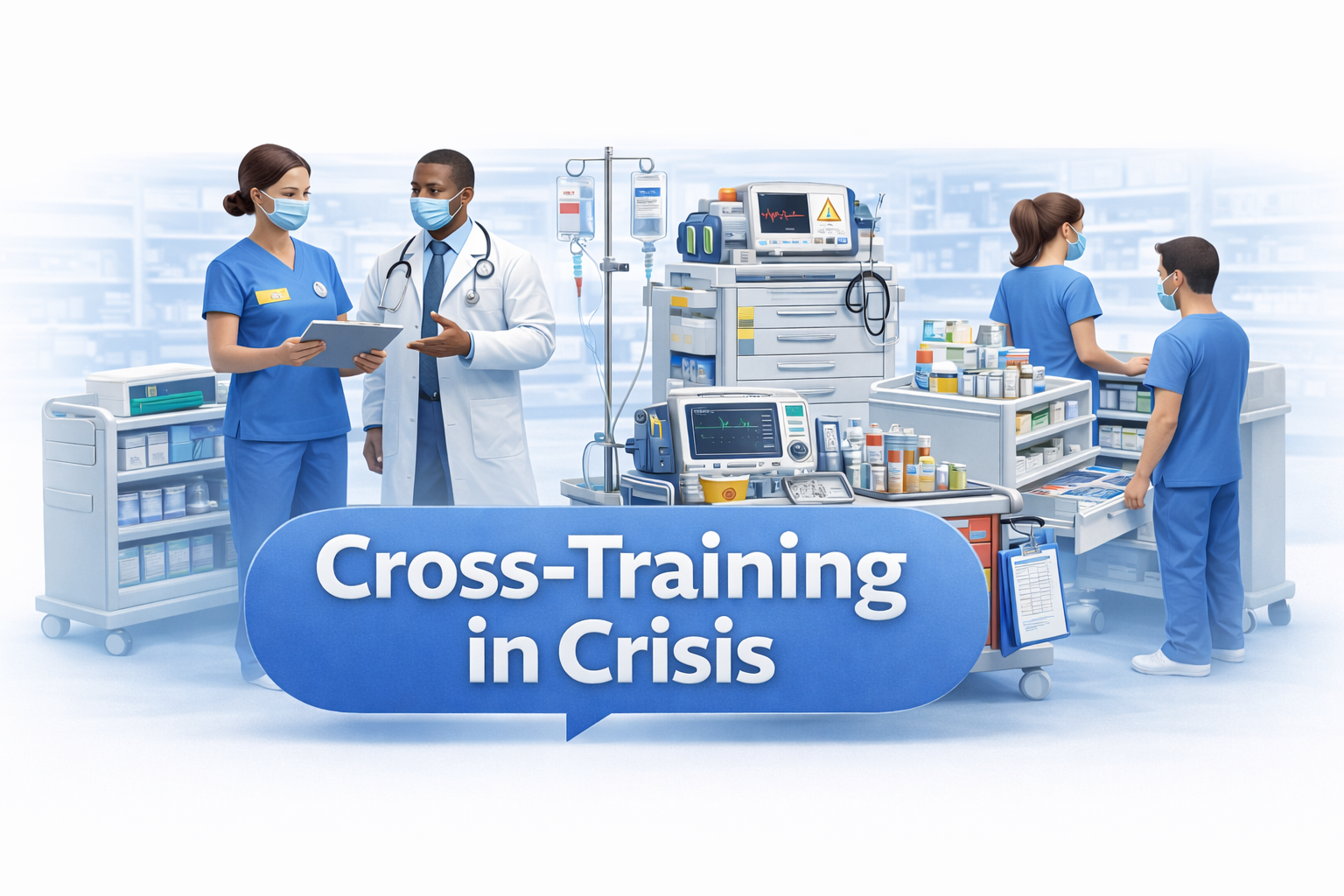
Preparing clinicians for unfamiliar roles and situations can be an essential part of ensuring readiness in crises, and cross-training programs are an effective way to accomplish this. Part of this preparation includes maintaining a physical environment that can support a trained clinician at the moment of crisis. Cross-trained clinicians coming into an unfamiliar unit have none of the environmental familiarity that permanent staff develop over time. Every source of disorganization will be more difficult for them to navigate than it would be for someone who works in that unit every day.
Cross-training is a deliberate investment in ensuring that the right clinician can step into a necessary role at a pivotal moment. Whether that investment pays off depends largely on the physical environment and equipment organization of the unit they deploy into.
Why Do Cross-Trained Staff Struggle in Unfamiliar Units?
Several conditions determine whether cross-training successfully transfers from simulation into practice, environment and equipment organization being two of them. Facilities that invest in cross-training programs and support organized environmental conditions are getting the most out of their investment and ensuring cross-trained teams are fully equipped to handle crises.
How Disorganization Affects Cross-Trained Staff
Simulation training can build clinical knowledge and the automatic physical responses that allow clinicians to act without conscious deliberation — but both are harder to access when the environment is unfamiliar and disorganized. When a cross-trained clinician is placed in an unfamiliar environment, they can lose their automaticity, requiring them to use limited cognitive bandwidth to search for necessary supplies to perform a role in an active emergency.
Equipment Readiness and the Rotating Clinician
Permanent staff may have an informal awareness of their unit’s equipment status, such as whether a cart was recently used or if the supply is running low. A rotating clinician lacks this context and may arrive assuming the environment is fully prepared because nothing visible suggests otherwise. When equipment readiness systems are undocumented or inconsistent, the rotating clinicians may be the ones to discover a supply issue mid-emergency, when there is little time to address it. Implementing tools such as tamper-evident seals and individual gate locks can make readiness legible at a glance, rather than something to be discovered in the moment.
How Do You Prepare Staff for Emergency Surges?
Creating a useful cross-training program involves preparing your staff for a variety of situations that may arise during emergencies, including filling in at unfamiliar roles or performing tasks outside their usual scope. To make this training as beneficial as possible, design the program around real conditions and organize practice sessions to put the training into context.
Designing Cross-Training Around Real Deployment Conditions
A scenario-based cross-training program should closely resemble real-world occurrences and events. When designing a program, be sure to:
- Run drills that mirror real surge conditions rather than walking staff through basic skills checklists.
- Train clinicians in the specific roles they’ll be assigned during deployment — medication administration, compressions, documentation — rather than giving them a generalist orientation.
- Incorporate practice scenarios that take place in the actual units where clinicians may be deployed to help build familiarity with the space before a crisis occurs.
Cross-training is more beneficial when it’s built around both clinical skills and put into the context of the deployment environment.
Putting Cross-Training Into Practice
To run effective cross-training, consider the following operational steps to ensure the process is smooth and worthwhile:
- Schedule cross-training rotations during lighter workload times and ensure clinicians can get exposure to the unit as it operates day-to-day.
- Pair cross-trained clinicians with permanent staff members during the initial live deployment so the trainees have a point of contact for unit-specific questions and guidance.
- Organize a debriefing after each cross-unit practice deployment (and real deployment) to surface any friction in the environment, equipment, or process that did not get caught.
Equipment organization and the physical environment should be treated as core components of the training curriculum, not delegated to facilities as an afterthought.
How Cart Organization Supports Cross-Trained Teams
To best support cross-trained teams, organizing the physical layout and equipment used in units can ensure uniformity in training and in real-world scenarios.
Using a standardized medical cart configuration and fixed equipment placement makes it easier for cross-trained clinicians to act using spatial memory rather than searching for equipment. Practices like identical or similar drawer organization across the different carts in a facility allow clinicians trained on one cart to locate the same items on other carts in different units without searching or reorienting. Investing in unit accessories like drawer dividers and divider trays for medical carts can make it easier to organize essential equipment consistently. Other techniques, such as labeling and color coding, are useful for maximum visibility of cart contents.
Consistent drawer organization is most effective when it reflects clinical function. A clinician assigned to airway management or medication administration should be able to go directly to the relevant drawer without having to interpret an unfamiliar organizational system under pressure.
Keeping Carts Ready Between Deployments
Cart organization is an essential element of preparedness even after the emergency. Cross-unit deployments use up supplies and can disrupt organized systems, which may lead to readiness gaps for the next clinician if carts aren’t reliably and promptly restocked. Using tools like gate locks, which allow drawers to lock independently and help teams identify which drawers were accessed, can make the restocking process easier and quicker.
Tamper-evident seals help provide a visual signal: a rotating clinician using an unfamiliar medical cart can quickly confirm with a glance if a cart or drawer has been accessed since its last check and restock, reducing the need to consult documentation. Facilities implementing cross-training programs should train clinicians to use and understand these tools. During crises, both locks and seals can save time and keep processes running smoothly for cross-trained teams.
Conclusion
Cross-training is an investment in people, and the physical environment either protects or wastes that investment. Clinicians who have been carefully prepared for cross-unit deployment still depend on organized, standardized, and ready equipment to perform when it counts. Disorganization within and across units affects all clinicians, especially cross-trained and rotating staff.
Facilities that combine realistic practice scenarios, mentorship, and equipment readiness in their cross-training programs will likely be better positioned to respond effectively when a crisis actually arrives.
For over 50 years, Waterloo Healthcare has supported emergency departments with durable, intelligently designed medical carts that help cross-trained teams move with confidence in any unit. Contact our team to learn how our customizable solutions can support your emergency department staff.
Frequently Asked Questions
What should be included in a cross-training program for nurses?
Effective cross-training programs combine role-specific simulation drills, hands-on practice in actual deployment units, and mentorship from permanent staff during initial live rotations. Equipment familiarity and readiness should be treated as a core component of the curriculum rather than an afterthought.
How does equipment organization affect emergency response?
Disorganized equipment forces clinicians to search for supplies instead of acting, wasting critical time in urgent situations. Standardized cart configurations, consistent labeling, and color coding allow clinicians to locate critical items using spatial memory, keeping responses fast and focused.
How do you standardize medical carts across facilities?
Use identical drawer organization across all carts, supported by dividers, labels, and color coding. Display facility-wide cart maps on each cart’s exterior, centralize restocking procedures, and use tamper-evident seals so any clinician can confirm readiness at a glance without reviewing documentation.
What makes a cross-training simulation effective?
Simulations should mirror real deployment conditions: run drills in actual units, assign clinicians to specific roles rather than generalist orientations, and use real equipment. Debriefing afterward to surface friction with the environment or equipment is as important as the drill itself.