Why Hospitals Are Moving to iCLASS® Credential Technology for Medical Cart Access
A Hospital Customer’s Perspective
In today’s healthcare environment, protecting medications, controlled substances, patient information, and critical supplies has become increasingly important. Medical carts are no longer simply storage devices—they are mobile workstations that contain valuable assets and often provide access to medications and patient care documentation.
As hospitals modernize their security infrastructure, many are evaluating whether traditional 125 kHz HID proximity cards remain adequate or whether it is time to adopt HID iCLASS® smart card technology. From a hospital’s perspective, the decision extends beyond convenience and into patient safety, cybersecurity, regulatory compliance, and long-term operational efficiency.
The Evolution of Access Control
For decades, standard HID proximity cards have been widely used throughout healthcare facilities. These cards provide simple badge-based access to doors, parking areas, and equipment. While reliable, the technology was developed when cybersecurity threats were far less sophisticated.
HID iCLASS technology represents the next generation of credential management, utilizing encrypted smart card communication to significantly enhance security while supporting multiple applications from a single employee badge.
When selecting medical carts with electronic locking systems, hospitals should carefully consider the differences.
| Standard HID Prox | HID iCLASS |
|---|---|
| 125 kHz technology | 13.56 MHz smart card |
| Fixed card ID | Encrypted authentication |
| Easily copied | Highly resistant to cloning |
| Single-purpose | Multi-application capable |
| Limited memory | Secure onboard memory |
| Legacy technology | Modern enterprise platform |
The Risks of Staying with Standard HID Proximity
-
Card Cloning Risks
Perhaps the greatest concern with traditional HID proximity cards is that many legacy formats can be duplicated using inexpensive commercially available equipment.
If an employee badge is lost or temporarily borrowed, unauthorized copies may be created without detection.
For a medical cart containing:
- Narcotics
- Controlled substances
- Emergency medications
- Expensive medical devices
- Patient information
This presents a significant security concern.
iCLASS credentials utilize encryption and mutual authentication that make unauthorized duplication substantially more difficult.
-
Internal Theft and Diversion
Healthcare organizations continually work to reduce medication diversion and unauthorized access to supplies.
A cloned standard proximity card could potentially provide access to:
- Medication carts
- Procedure carts
- Anesthesia carts
- Specialty storage carts
By implementing iCLASS technology, hospitals add another layer of protection against credential misuse.
-
Cybersecurity Concerns
Healthcare continues to be a prime target for cybercriminals.
While medical carts may not directly store patient records, they increasingly interact with:
- eMAR systems
- Medication dispensing workflows
- Mobile computing stations
- Asset tracking platforms
- Networked electronic locks
Modern cybersecurity strategies emphasize secure authentication throughout the healthcare ecosystem.
Encrypted credential technologies align with this approach.
Regulatory and Compliance Benefits
Healthcare organizations face increasing scrutiny regarding controlled substance accountability and asset security.
iCLASS technology can help support organizational goals related to:
- Controlled substance security
- Medication diversion prevention
- Chain-of-custody documentation
- Asset accountability
- Internal security policies
While badge technology alone does not guarantee compliance, stronger authentication supports broader risk management initiatives.
One Badge, Multiple Functions
One of the biggest operational advantages of iCLASS is credential consolidation.
A single employee badge can potentially support:
- Building access
- Pharmacy access
- Parking
- Time and attendance
- Cafeteria payment
- Secure printing
- Medical cart access
- Medication room access
- Computer login authentication
Instead of carrying multiple credentials, staff use one secure badge throughout their shift.
This simplifies credential management while improving user acceptance.
Better Workflow for Clinicians
Nurses and clinicians want access that is both secure and fast.
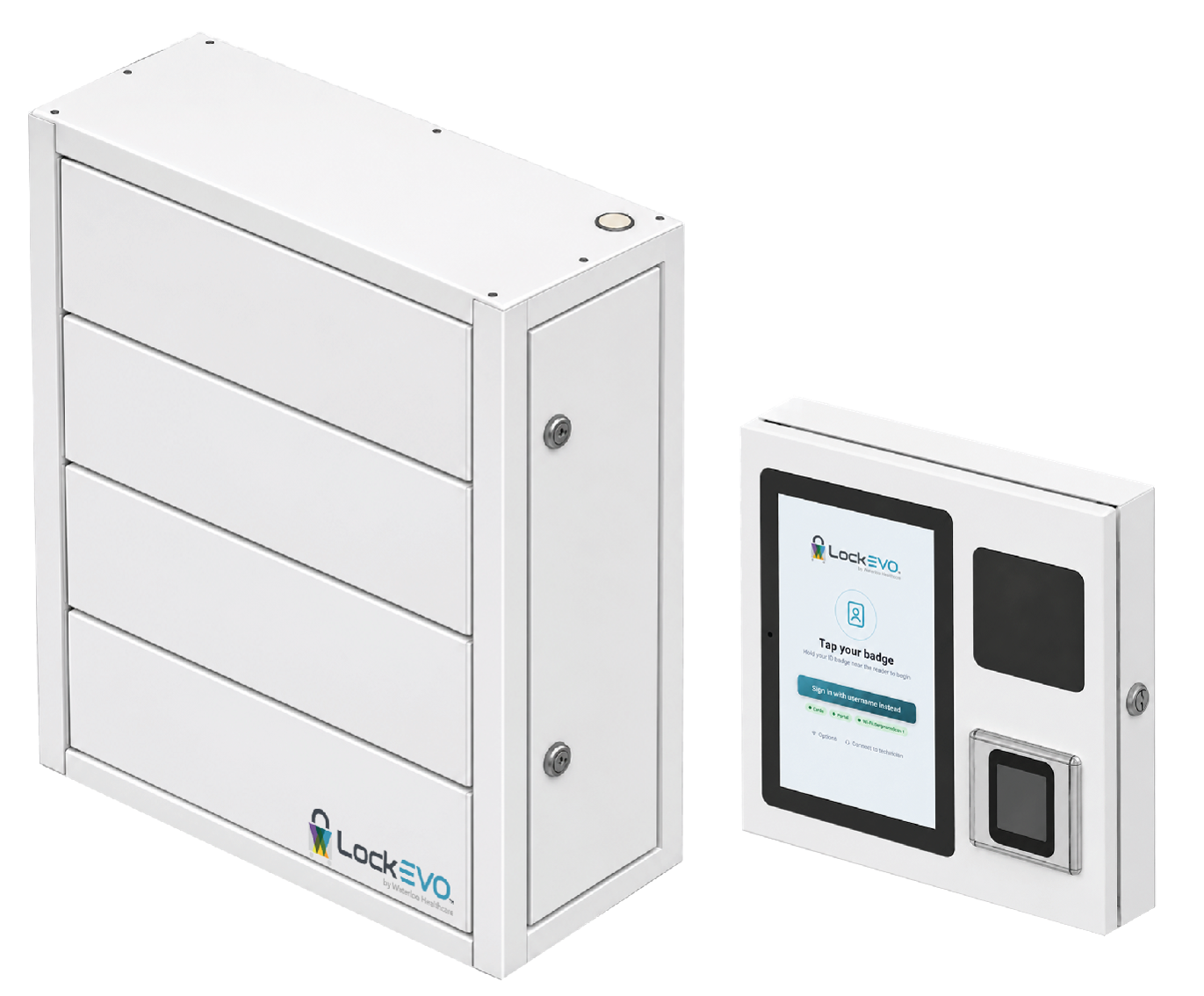
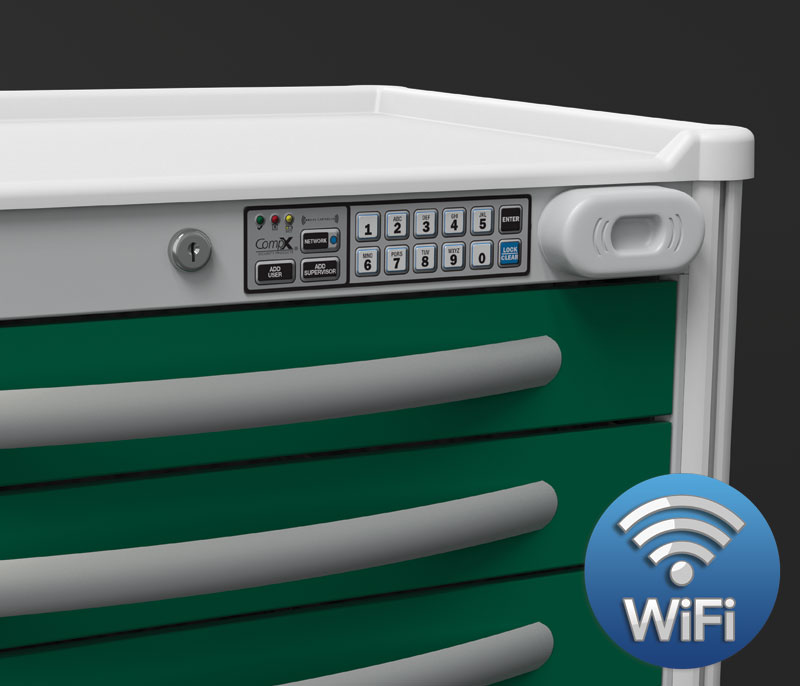
Medical carts equipped with iCLASS readers allow staff to:
- Tap their badge.
- Gain immediate access.
- Complete patient care tasks.
- Automatically relock after use.
There are no keys to lose and no PINs to remember.
The workflow remains simple while improving overall security.
Future-Proofing the Hospital Investment
Hospitals typically expect medical carts to remain in service for 10 to 20 years.
Choosing legacy credential technology today may create challenges as enterprise access control systems evolve.
Many hospitals are already transitioning toward:
- Smart credentials
- Mobile credentials
- Multi-factor authentication
- Digital identity management
- Enterprise-wide credential ecosystems
Selecting iCLASS-compatible carts helps ensure today’s investment remains compatible with tomorrow’s infrastructure.
Lower Administrative Costs
Managing physical keys creates significant overhead.
Badge-based cart access reduces:
- Key issuance
- Lost key replacement
- Rekeying costs
- Lock cylinder replacement
- Administrative tracking
When an employee leaves the organization, access rights can simply be disabled through the existing credential management system.
Improved Audit and Accountability
Many electronic locking systems paired with iCLASS readers can support audit capabilities that help identify:
- Who accessed the cart.
- When access occurred.
- Frequency of use.
- Unauthorized access attempts.
This additional visibility can assist investigations and operational reviews while encouraging accountability.
Why Hospitals Choose iCLASS for Medical Carts
Hospitals increasingly view iCLASS as an investment in risk reduction rather than simply an upgrade in badge technology.
Key advantages include:
Enhanced Security
- Encrypted credential communication.
- Resistance to card cloning.
- Better protection against unauthorized access.
Improved Operational Efficiency
- One badge for multiple applications.
- Faster caregiver workflow.
- Simplified credential management.
Better Asset Protection
- Reduced medication diversion risk.
- Better protection for high-value equipment.
- Improved accountability.
Future Compatibility
- Supports evolving access control systems.
- Compatible with modern smart credential strategies.
- Better long-term investment for carts with 10–20 year service lives.
Conclusion
From a hospital customer’s perspective, the question is no longer whether badge-based cart access is beneficial, but whether legacy credential technology provides sufficient protection for today’s healthcare environment.
Standard HID proximity cards served healthcare well for many years, but evolving security threats, increasing medication diversion concerns, and enterprise cybersecurity initiatives are driving hospitals toward more secure authentication methods.
Medical carts equipped with HID iCLASS reader technology offer stronger credential protection, support modern healthcare workflows, reduce administrative burdens, and help healthcare organizations protect some of their most valuable assets.
For hospitals investing in new fleets of medication, anesthesia, emergency, and procedure carts, specifying iCLASS-compatible electronic locking systems represents a practical step toward a safer, smarter, and more secure healthcare environment.
Frequently Asked Questions
What is the difference between HID Prox and HID iCLASS credentials?
HID Prox credentials use older 125 kHz technology and transmit a fixed card identification number. HID iCLASS credentials use encrypted smart card technology with mutual authentication, making them significantly more resistant to cloning, unauthorized duplication, and credential misuse. HID iCLASS also supports multiple applications through a single employee badge.
Why are hospitals replacing HID Prox cards with iCLASS technology?
Many hospitals are upgrading to iCLASS technology to improve security, support enterprise access control initiatives, reduce the risk of credential cloning, and align with modern cybersecurity strategies. As healthcare organizations invest in smart credential ecosystems, iCLASS provides stronger authentication and greater long-term flexibility.
How does HID iCLASS help reduce medication diversion risks?
While no credential technology can eliminate diversion by itself, HID iCLASS helps reduce unauthorized access by using encrypted authentication methods that are significantly more difficult to duplicate than traditional proximity cards. When combined with electronic locking systems and access auditing, iCLASS supports stronger medication security practices.
Can a single HID iCLASS badge be used for multiple hospital functions?
Yes. One of the primary advantages of HID iCLASS technology is credential consolidation. A single badge can often be used for building access, medication rooms, pharmacy access, medical cart access, secure printing, parking, time and attendance, and other authorized applications.
Why is secure access important for medical carts?
Medical carts frequently contain medications, controlled substances, emergency supplies, expensive equipment, and sensitive patient care resources. Secure access helps healthcare organizations protect assets, improve accountability, support internal security policies, and reduce the risk of unauthorized access.
How do electronic locking systems improve medical cart security?
Electronic locking systems eliminate many of the challenges associated with physical keys, including lost keys, rekeying costs, and unauthorized key duplication. Badge-based access allows healthcare organizations to manage permissions centrally and quickly deactivate access when personnel changes occur.
Do HID iCLASS readers support audit trails and access tracking?
Many electronic locking systems equipped with HID iCLASS readers can record access events, helping facilities identify who accessed a cart, when access occurred, and whether unauthorized access attempts were made. These audit capabilities can support investigations, accountability initiatives, and operational reviews.
Are HID iCLASS-compatible carts a good long-term investment?
Hospitals often expect medical carts to remain in service for 10 to 20 years. Selecting carts with iCLASS-compatible locking systems can help ensure compatibility with evolving access control technologies, digital identity initiatives, smart credentials, and future security requirements.
Which types of medical carts benefit most from HID iCLASS access control?
iCLASS technology is commonly used on medication carts, anesthesia carts, emergency carts, procedure carts, specialty storage carts, and other mobile healthcare workstations where secure access and accountability are important.
How does HID iCLASS technology improve clinician workflow?
iCLASS-enabled carts allow authorized clinicians to quickly access carts using a badge tap rather than physical keys or PIN codes. This provides fast, secure access while reducing interruptions, improving workflow efficiency, and helping caregivers focus more time on patient care.